This page contains information for young people about the risks of gambling and what support options are available to them. Download this page as a PDF (178KB) or Word .docx (804KB).
Young people

On the page
What is gambling?
- Gambling is risking anything of value (usually money) on the outcome of an event involving chance when the probability of winning or losing is uncertain.
- There is always uncertainty when you gamble. The outcome is out of your control, and you can never be sure you will win.
- In Australia, gambling is illegal for people under 18-years-of-age.
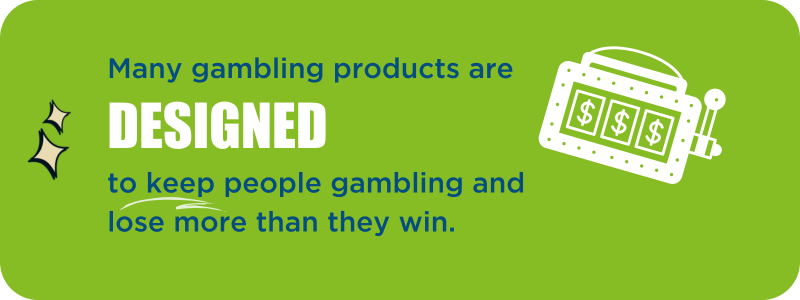
- Many gambling products are designed to keep people gambling and lose more than they win.
Test your knowledge about gambling
What gambling really costs
- Australians lose the most in the world per adult on legal forms of gambling: $32 billion in 2023/24.
- On average, Victorian adults lost $1,357 each in 2023/24 to gambling.
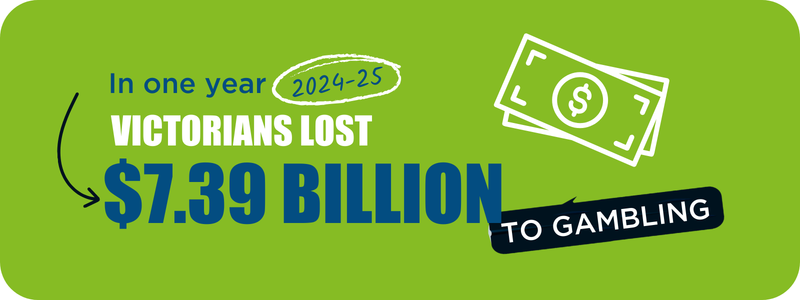
- Victorians lost $7.39 billion to gambling in 2024/25.
- Victorians lost $3.15 billion on electronic gaming machines (pokies) at hotels and clubs in 2024/25.
- Total number of pokies machines in Victorian hotels and clubs: 26,258 (at 30 June 2025).
Source | Victorian Gambling and Casino Control Commission, Gambling data.
What’s the big deal?
Many people gamble without any issues. However, for some people gambling has the potential to cause significant psychological, health, relationship, legal and financial harm both to the person who gambles and the people around them.
While gambling may seem like a normal and harmless activity, it is important to remember that it is designed for you to lose more than you win.
The issue with gambling ads
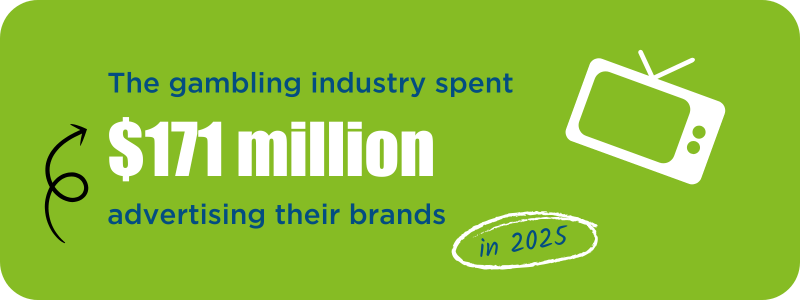
Unless you live under a rock, chances are you’ve seen a few gambling ads. In fact, the gambling industry in Australia spent $171 million advertising their brands across all media platforms in 2025.
Next time you see a gambling ad, take notice of whether it:
- only shows people winning
- uses celebrities or influencers to appeal to young people
- makes gambling seem like a fun activity to do with friends
- offers ‘free bets’ and ‘cash backs’ to make it seem like winning is guaranteed.
These advertising tactics can prime you to believe that gambling is a risk-free and guaranteed way to make money. In reality, you are more likely to lose money.
Source | Nielsen Ad Intel, Biggest Ad Spenders of 2025 Report
How gambling affects the brain
When people have a gambling win, the brain releases a feel-good chemical called dopamine.
But when people gamble often, their brains gets used to the dopamine, which can make that 'winning feeling' difficult to achieve. As a result, some people may gamble more and more to feel the same level of pleasure they did when they first started gambling.
Some gambling products, like electronic gaming machines (pokies), make people feel like they’re winning, even when they’re not. This encourages people to keep gambling to try to recapture that winning feeling – and that’s when gambling can become a problem.
LEARN MORE: How gambling affects the brain
Gambling factsheets and research for young people
Factsheets
- Gambling among secondary students A4 factsheet - PDF (92KB) or Word .docx (563KB).
- Understanding and recognising gambling harm A4 factsheet - PDF (118KB) or Word .docx (72KB).
Research and data
Worried about someone else's gambling?
If you're worried that someone you know is having issues with gambling, having a conversation with them can let them know you care, and encourage them to get help. Talking to someone sooner rather than later can make a big difference.
LEARN MORE:
Get support
Gambler's Help Youthline is there to support you if you are worried about your own or someone else's gambling. Call 1800 262 376 for advice and support, 24 hours a day, seven days a week.
It's anonymous, confidential and free.
Download this page as a PDF (178KB) or Word .docx (804KB).