This page contains information for parents and carers about the way young people can be exposed to gambling through video games. Download this page as a PDF (385KB) or Word .docx (1.3KB).
Gambling and gaming
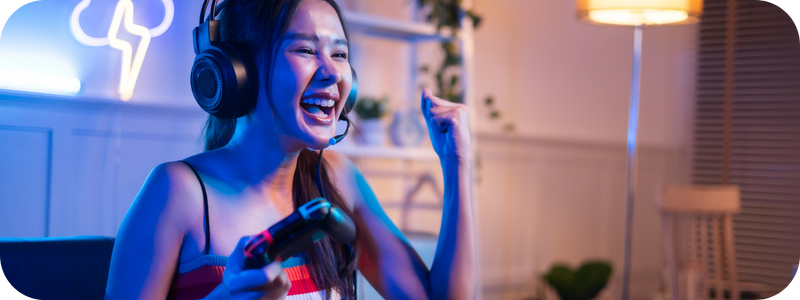
Gaming can be an important and positive part of a young person's development. It’s a way to socialise and foster identity, it encourages teamwork, and it helps hone critical thinking and problem-solving skills. However, gaming can come with some negative consequences that parents and young people should be aware of.
On this page
Games that look like or feature gambling
Game design increasingly features simulated gambling and gambling-like features which can:
- activate the same pleasure response in the brain as gambling
- teach kids how to gamble with in-game gambling scenarios such as poker, slots and casino table games
- expose kids to simulated gambling in a risk free environment, priming them to take up real gambling without understanding the risks and potential for harm.
Common gambling-like features in games
Many popular video games share features in common with gambling, including:
- chance-based elements such as loot boxes
- game play designed to keep you playing and spending
- the potential to cause harm when done excessively.
Some of the ways gambling features in gaming include:
Social casino games such as Zynga Poker and Slotomania are available on social media platforms. They are free-to-play, but payments can be made to unlock certain features or levels, or to buy in-game currency. No winnings can be withdrawn from these games, so they are not regulated as gambling products and are therefore legally available to people under 18 years. Research has raised concerns that playing social casino games may be priming children to move onto real gambling products.
Loot boxes offer players a chance to unlock random rewards which can range from worthless cosmetic items to highly valuable objects that can give a player an advantage. They mirror gambling because the outcome of purchasing a loot box is uncertain, and the thrill of reward encourages repeat spending.
Several countries, such as Belgium and the Netherlands, have even classified loot boxes as a form of gambling, requiring game developers to modify or remove them to comply with local regulations.
Skins are mostly cosmetic changes to a player's in-game appearance or weapons. Although they usually don't change how you play the game, skins can be worth real cash because of how rare or valuable they are.
Players can trade or sell skins for actual money, which has sparked the rise of third-party sites where you can gamble skins in games of chance - such as poker or roulette.
The lack of regulation on these sites is concerning, especially since a lot of the users are underage and might not fully understand the gambling risks or what they're getting into.
Short for electronic sports, esports are organised gaming competitions among professional video game players and teams. Popular esport platforms include Twitch, YouTube, Facebook Gaming, Discord, and Steam TV. Players and spectators can place bets on esports, much like traditional sports betting. While many platforms focus on legal and regulated betting, the accessibility of online gambling has led to concerns about underage betting.
Gacha games are an increasingly popular genre of gaming that has gained large audiences and profits. Similar to loot boxes, gacha games entice players to spend real money or in-game currency to ‘roll’ for random items, characters or cosmetic upgrades. Gacha games have been criticised for being addictive due to the randomised rolling for items and the dopamine rush of obtaining rare or powerful items.
Popular gacha games include Genshin Impact, Honkai Star Rail, Raid: Shadow legends and Dragon Ball.

The gamblification of gaming
Games are designed to be engaging, immersive, and even addictive. Knowing how games incorporate gambling-like mechanisms to keep kids playing can help you understand their behaviour, and inform strategies to help them find a healthy life balance.
Some of the ways games can be similar to gambling include:
Games are carefully crafted to stimulate the brain's reward system. Gaming triggers the release of a 'feel good' chemical in the brain called dopamine that helps us feel pleasure.
When gaming, each level-up or achievement-unlocked triggers a surge of dopamine. Over time, the brain needs more and more dopamine to achieve that same initial feeling of pleasure. This often means that kids will play longer (and spend more!) to achieve that 'winning' feeling.
The good news is, there are many healthy ways to trigger the release of dopamine. Some examples include exercise, meditation, yoga, playing with a pet, walking in nature or reading a book.

If you've ever invested a lot of time, effort and money into an endeavour, you'll know how difficult it can be to abandon it. This phenomenon is called the 'sunk-cost fallacy' and is the reason why many people continue to game or gamble, even when it's no longer in their best interest.
Game designers know that players are more likely to keep playing and spending if they have already invested a lot of time, effort and energy into a game. For example, an activity known as 'grinding' or 'treadmilling' - a repetitive and usually unenjoyable activity a player must endure to achieve a desired result - is a common way that games can make players feel that they have invested too much to stop.
Being aware of when a game is no longer enjoyable can help you recognise that it's time to take a break and perhaps spend your time on activities that make you feel good.

Near-misses are when a player comes close to winning but falls just short. They are a common feature in gambling and can create a sense of almost succeeding. Many video games also incorporate near-misses to maintain player engagement. Psychologically, near-misses can trigger the same pleasure responses in our brain as actual wins, and can lead to prolonged gaming sessions as players keep trying in the hope of achieving a desired goal.

Random rewards are a fundamental characteristic of gambling, and cited as being the main reason why gambling is so addictive. Game designers often incorporate random rewards in games with features such as loot boxes, where the unpredictability of winning creates a sense of excitement and keeps players returning for more.
By providing random rewards at varying intervals - a concept known as variable-ratio reinforcement - players never know when the next big win will occur and are strongly motivated to keep playing and spending.

Microtransactions are in-game purchases using real money to buy features such as character customisations, game progression, loot boxes, and in-app currency. They are a common way for video game companies to make money and can range in value from $0.99 to $99+.
Kids often find microtransactions irresistible and are seen as a way of keeping up with their peers within a game. Their small price and ease of purchase make it easy for players to spend more than they can afford without noticing.
LEARN MORE:
Download this page as a PDF (385KB) or Word .docx (1.3KB).